
I have a slightly unusual relationship with Facebook.
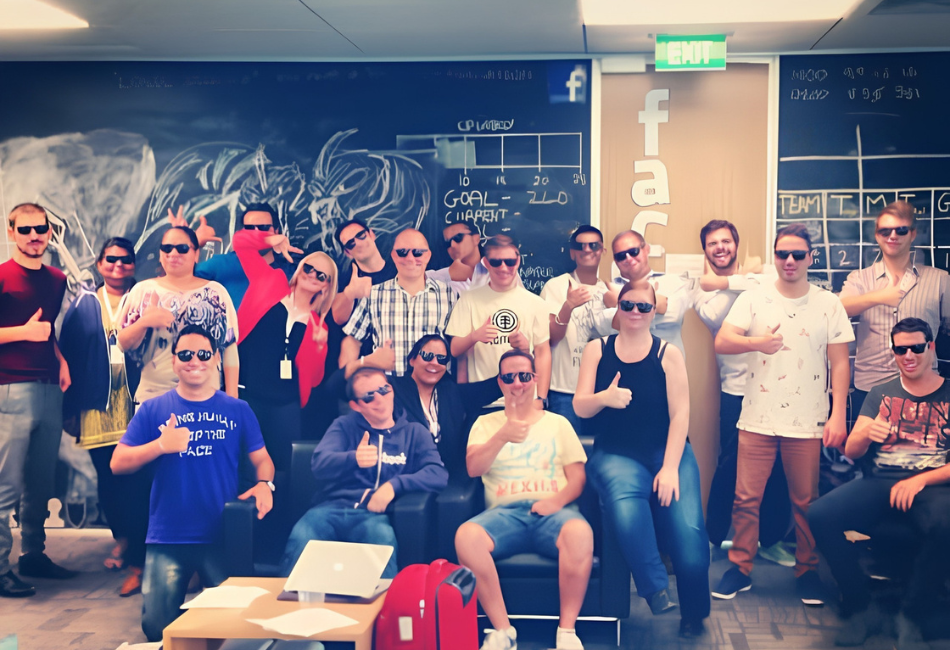
Between June 2012 and October 2013, I worked for Teletech, which was contracted to Facebook. I have a few photos from the time and, somewhat surprisingly, I still have the Facebook laptop bag.
Looking back at those photos now is quite strange. For one thing, I looked considerably younger. For another, it reminds me just how unusual the job felt at the time.
It was work. It just looked like Facebook.
One of the strangest things about working on Facebook was that you were on Facebook all day.
Not checking Facebook.
Not pretending to work while checking Facebook.
Actually working, whilst on Facebook.
That could sometimes make switching off a little difficult. You could spend the entire day on Facebook as part of your job, finish work, go home and then realise that the last thing you wanted to do was open Facebook again.
It was work. It just happened to look suspiciously like Facebook.
Fast forward more than a decade and I have found myself in a remarkably familiar position.
I work in recruitment. And I spend a lot of time on LinkedIn.
Which brings me to the recent news surrounding Facebook and Instagram.
The allegations concerning Meta and the impact of its platforms on young people are serious. I certainly don’t want to make light of them, particularly when they concern teenagers and claims about the way social media platforms were designed and used.
But the story did make me think about my own experience of working on Facebook, and how familiar LinkedIn has started to feel in recent years.
It is Facebook. Just wearing a suit.
Because, let’s be honest, LinkedIn looks an awful lot like Facebook.
The blue branding.
The red notification icons.
The connections.
The reactions.
The endless feed.
The scrolling.
And that little red number telling you that something has happened and you might want to have a look.
Even the terminology feels familiar. Facebook had friends; LinkedIn has connections. Facebook had likes; LinkedIn has reactions. Facebook had the news feed; LinkedIn has the feed.
Even the basic experience is remarkably similar.
Then there is the content.
LinkedIn used to feel like somewhere you went to see what was happening professionally. These days, spend enough time scrolling and you will find motivational posts, arguments, humblebrags, personal revelations, outrage, career announcements and somebody explaining the profound leadership lesson they learned from making their morning coffee.
It is Facebook.
Just wearing a suit.
The professional excuse for scrolling.
That might be the thing I find most amusing about the whole comparison. When I worked on Facebook, I sometimes struggled with the fact that I was spending my working day on a social media platform.
Now I work in recruitment, and sometimes I have exactly the same feeling on LinkedIn.
And it isn’t just the appearance of the platforms that feels familiar. You can open LinkedIn for one perfectly legitimate reason, see something interesting in the feed, scroll a little further, see something else, and suddenly realise you have completely forgotten why you opened it in the first place.
Perhaps that is the real trick.
Facebook managed to make scrolling feel like a social activity.
LinkedIn has managed to make scrolling feel productive.
And that is much harder to feel guilty about.
You’re not wasting time on social media; you’re networking.
You’re not scrolling; you’re keeping up with the market.
You’re not reading someone’s post about their morning routine; you’re building your professional network.
At least, that’s what I’m telling myself.
Don’t break anyone’s career.
There is another thing I remember from that era: “Move fast and break things.” It was a pretty good philosophy for a technology company trying to build, experiment and change things at incredible speed. I’m just not sure it is quite as good a philosophy for recruitment.
When you are helping someone decide what to do with their career, “move fast and break things” probably isn’t the approach you want. Breaking a piece of software is one thing. Breaking someone’s career is quite another.
So perhaps my preferred recruitment version would be something a little less Silicon Valley: take your time, get it right, and try not to break anyone’s career. It doesn’t have quite the same ring to it, but still, I think it works.
The irony is that, more than a decade after working on a Facebook contract, I have somehow ended up spending a significant part of my working life on another blue social platform. Back then, being on Facebook all day was unusual because it was my job. Now being on LinkedIn all day is unusual because it is my job.
The platforms have changed. The purpose has changed. My career has changed. But apparently, the scrolling hasn’t.
And I still have the Facebook laptop bag.
Maybe that is the funniest part of all. After all these years, I haven’t really escaped Facebook. I’ve just found a more professional place to scroll.
And if LinkedIn ever faces a class action from recruiters claiming the platform made us spend far too much time scrolling, I know where we’ll be.
At the front. Hands out. Ready to make our claim.
After all, we have been professionally scrolling for years.
We just call it work.